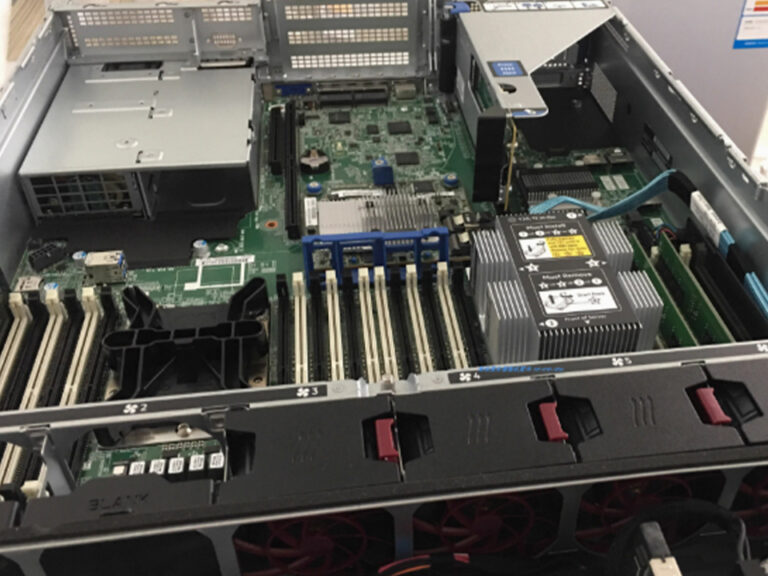
Looking to contact semiconductor manufacturer teams for wet process equipment? Meraif supports Southeast Asia buyers with solutions for silicon wafers, IC wafers, advanced packaging, IC substrates, and SMT—backed by patented nozzle technology, vacuum negative pressure spray cleaning, and supercritical fluid expertise for high-precision semiconductor cleaning.
Label Consumables Planning Guide for High-Volume Warehouses RFQ Guide
I have watched warehouse teams spend six figures on WMS tuning, handheld scanners, conveyors, print engines, RFID portals, and consultant decks, then lose the day because a $0.012 label curled off a corrugated case at 2:13 a.m. during outbound wave three. What does that tell us?
It tells us the unglamorous part is the control point. Warehouse label supplies are not “office consumables.” They are production inputs. Treat them like bolts in an aircraft assembly, not like printer paper.
The U.S. Census Bureau estimated 2024 U.S. retail e-commerce sales at $1.1926 trillion, up 8.1% from 2023, with e-commerce reaching 16.1% of total retail sales; that volume does not move without receiving labels, putaway labels, license plate numbers, carton IDs, SSCC labels, returns labels, pallet labels, RFID labels and tags, and thermal transfer ribbons that survive real abuse.
And abuse is the point. Warehousing is physical. BLS 2024 data shows general warehousing and storage at 4.9 recordable nonfatal injury and illness cases per 100 full-time workers, more than double the private-industry all-sector rate of 2.3; bad labeling does not just slow scans, it drives extra touches, rework, relabeling, walking, bending, and exception handling.
Table of Contents
The Hard Truth: Your RFQ Is Probably Written for the Vendor, Not for the Warehouse
Most warehouse labeling supplies RFQ documents are lazy. I said it.
They ask for “4×6 thermal labels,” “barcode labels,” or “RFID tags” as if those words mean anything without facestock, adhesive chemistry, liner release, core diameter, printer model, ribbon resin grade, storage temperature, scanner distance, WMS symbology, humidity, carton substrate, and print-speed requirement.
That is how buyers get three quotes that look comparable and are not comparable at all.
A serious label consumables planning guide starts with the operating environment. Not the catalog. Not the vendor brochure. The floor.
For a high-volume warehouse, I want to know:
Receiving cartons per day
Outbound cartons per day
Pallets built per shift
Relabel rate by zone
Print speed, usually 6–12 ips on industrial thermal printers
Printer resolution, usually 203 dpi or 300 dpi
Label size mix, often 4 x 6 in, 4 x 2 in, 3 x 1 in, and shelf/bin formats
Ribbon width and roll length, often 110 mm x 300 m or 110 mm x 450 m
Environment: ambient, refrigerated, freezer, dusty, oily, UV-exposed, or chemical-contact
RFID protocol: usually UHF EPC Gen2 / ISO/IEC 18000-63
Boring list? Good. Boring is where money hides.
Forecast Demand by Scan Events, Not by Last Year’s Purchase Orders
The fastest way to underbuy warehouse barcode labels is to forecast from purchasing history. That number already contains stockouts, substitutions, emergency orders, shrinkage, spoilage, and the quiet little hoarding behavior that happens when supervisors no longer trust supply.
I prefer scan-event modeling.
Start with operational moves. Receiving. Putaway. Replenishment. Picking. Packing. Shipping. Returns. QA holds. Rework. Cross-dock exceptions. Cycle count relabels. Then assign a label or ribbon consumption factor to each event.
Here is the base formula I use before I let any vendor touch the RFQ:
Annual labels required = daily units x label events per unit x operating days x waste factor x growth factor
Waste factor is not optional. For high-volume warehouses, I usually start with 8–15% unless there is hard evidence that printer calibration, operator training, and material quality are excellent. For RFID labels and tags, I separate encoding failure, damaged inlays, printer voiding, and read-rate retesting. One bucket is too vague.
If the warehouse is scaling e-commerce, do not let finance bully the model into last year’s average. The Census number above is the macro clue; your own order profile is the real one.
Direct Thermal vs Thermal Transfer: Stop Buying by Habit
Direct thermal is cheaper at the start. Thermal transfer is cheaper after the first failure.
That sounds cute, but it is not a slogan. Direct thermal labels use heat-sensitive coating and need no ribbon. Thermal transfer labels use a ribbon — wax, wax/resin, or resin — to print onto paper, polypropylene, polyester, or specialty facestock.
The wrong choice depends less on price and more on dwell time.
If a carton label only needs to survive two days inside an ambient parcel operation, direct thermal may be fine. If the label must last through storage, export, freezer exposure, UV light, abrasion, or compliance checks, thermal transfer usually wins.
RFID Labels and Tags: Do Not Let the Demo Become the Specification
RFID demos are theater. A clean conference-room read is not warehouse proof.
RFID labels and tags need controlled testing against your goods, your conveyor angles, your forklift paths, your metal shelving, your liquid-heavy SKUs, your dock doors, your RF noise, and your WMS exception logic. I have seen beautiful UHF RFID tags collapse near foil packaging, dense liquids, and metalized film. The vendor was not lying. The test was just too clean.
For high-volume warehouse label procurement, your RFQ should require:
Inlay manufacturer and model
Chip type and memory
EPC encoding format
Minimum read rate target, such as 99.0%+ under defined test conditions
Read distance range
Orientation tolerance
Void-marking process for failed encoded labels
Sample roll testing before award
Compatibility with specific RFID printers and encoders
GS1’s 2024 guidance around 2D barcodes is another warning shot: label strategy is becoming data strategy. GS1 US released guidelines in February 2024 to help apparel and general merchandise companies prepare for 2D barcode adoption by 2027, including implementation advice for brands, retailers, and solution providers.
So, yes, still buy thermal label supplies. But write the RFQ as if labels are data carriers, because they are.
The RFQ Line Items I Would Force Vendors to Price Separately
Bundled pricing is where accountability goes to die.
In a proper warehouse labeling supplies RFQ, each consumable should be priced and tested separately. Do not let a vendor bury poor ribbon performance inside a “complete label solution.” I want line-item clarity.
Ask for separate pricing on:
4 x 6 direct thermal shipping labels, rolls or fanfold
4 x 6 thermal transfer carton labels
GS1-128 pallet labels
Shelf/bin location labels
Polypropylene tote labels
Polyester rack labels
Wax ribbons
Wax/resin ribbons
Full resin ribbons
UHF RFID labels and tags
Preprinted color-coded labels
Void/rejected RFID label allowance
Emergency reorder surcharge
Freight and lead-time tiers
Sample roll charge
Artwork/setup/plate fees
This is also where infrastructure matters. If your printers, scanners, applicators, and workstations are installed like an afterthought, consumables will take the blame for electrical noise, bad routing, and weak connectivity. I would rather see RFQ teams standardize scanner and printer drops with a Cat 6A S/FTP shielded RJ45 Ethernet patch cable for high-noise automation areas than pretend label defects are always material defects.
And for the love of uptime, route cables properly. Cheap damage prevention, such as white flat nail cable clips for safe wire routing and fixing, often prevents the “mystery printer outage” that procurement later misreads as supplier unreliability.
The Warehouse Label Supplies RFQ Scorecard
A low bid is not a win if it raises reprint rate. It is a deferred bill.
Use a weighted scorecard. I like aggressive weighting because it exposes suppliers who are good at quoting and bad at surviving operations.
RFQ Category
Suggested Weight
What to Demand
Red Flag
Material performance
25%
Adhesion tests, scan-grade results, rub tests, temperature range
“Equivalent material” without datasheet
Printer/ribbon compatibility
15%
Tested on your printer models at real speed
Vendor avoids naming ribbon chemistry
RFID or barcode quality
15%
ANSI/ISO grade, read-rate test, encoding accuracy
No sample roll validation
Lead time and continuity
15%
Normal lead time, emergency lead time, backup plant
Single coating source, vague inventory claim
Cost transparency
15%
Unit price, freight, setup, waste allowance
Bundled pricing only
Technical support
10%
On-site trial, failure analysis, corrective action time
Sales-only support
Compliance documentation
5%
SDS, RoHS/REACH where relevant, GS1 support
“Available upon request” forever
Do not skip failure analysis terms. I want vendors to agree, in writing, how disputed failures are handled: retained samples, lot traceability, printer settings, ribbon batch, environmental conditions, photographs, barcode verifier readings, and replacement credit timeline.
Print Quality Is a Contract Term, Not a Hope
The label is only useful if the system reads it.
For warehouse barcode labels, specify barcode print quality. Use ANSI/ISO grading where possible. Define the scanner distance. Define the substrate. Define lighting. Define the print direction. Define quiet zones. Define whether the barcode is ladder or picket orientation.
A high-volume operation should not accept “scannable” as a specification. Scannable by what? A handheld scanner at 8 inches? A tunnel scanner at 550 feet per minute? A forklift-mounted scanner at an angle? A camera-based verifier under LED glare?
Precision matters.
If your automation line includes print-and-apply systems, conveyors, gates, or motion equipment, inspect the surrounding components too. A worn applicator cable or poorly shielded motion cable can create intermittent faults that look like label jams. For that reason, I like specifying supporting automation spares, including a shielded servo cable for semiconductor and SMT automation, in the same maintenance planning conversation as labels and ribbons.
Not the same category. Same uptime problem.
Storage Conditions: The Silent Killer in Label Consumables Planning
Label rolls age badly when stored like junk.
Adhesives migrate. Liners absorb moisture. Direct thermal coatings darken. Ribbon backcoats degrade. RFID inlays get crushed. Pallets sit near dock doors. Someone stacks label cartons sideways because the receiving team is busy. Then six weeks later, procurement hears, “The supplier sent bad labels.”
Maybe. Maybe not.
Your RFQ should require storage instructions and shelf-life data. Internally, enforce them.
Typical storage controls I want:
20–25°C ambient target where practical
40–60% RH target
Labels stored in sealed cartons until use
FIFO by lot number
No storage near heaters, dock doors, sunlight, or chemical fumes
RFID rolls protected from compression
Ribbon rolls kept away from dust and sharp edges
For print stations doing inspection, rework, relabeling, or electronics-adjacent operations, a stable bench setup matters. A modular ESD workbench for SMT and semiconductor assembly lines is not “label stock,” but the same discipline applies: controlled work area, predictable tool placement, fewer operator-created defects.
What I Would Put in the Vendor Trial Before Award
Never award a high-volume label contract on samples the vendor prepared specially.
I want production-lot samples. I want blind testing. I want operators involved, not just procurement and engineering. Operators know when a liner tears, when rolls telescope, when labels curl, when a ribbon wrinkles, when the printer needs density changes every shift.
Run the trial like this:
Use at least 3 production rolls per candidate material.
Test at normal and peak print speed.
Use the actual printer fleet: Zebra, SATO, Honeywell, TSC, Toshiba TEC, or whatever is installed.
Measure scan grade after printing, after handling, and after 24–72 hours.
Test adhesion on real cartons, totes, stretch wrap, bins, and pallets.
For RFID, test read rate across orientation, distance, density, and SKU type.
Record reprints per 1,000 labels.
Record operator complaints. Yes, really.
Retain samples by lot.
Force vendors to explain failures in writing.
If a supplier cannot survive that, they should not survive the RFQ.
For warehouses building their own label control modules, applicator interfaces, or sensor boards, it can also be sensible to standardize replacement electronics through a custom PCB control board for automation parts supply. Again, labels fail in systems, not in isolation.
The Planning Math Procurement Usually Avoids
Here is the ugly version.
Assume a warehouse ships 38,000 cartons per day, runs 300 days, and prints one shipping label plus one internal carton ID for 65% of cartons. Add 10% waste and 12% growth.
Shipping labels: 38,000 x 300 x 1.10 x 1.12 = 14,044,800 labels
Internal carton labels: 38,000 x 0.65 x 300 x 1.10 x 1.12 = 9,129,120 labels
Total carton labels: 23,173,920 labels
Now add pallet labels, tote labels, returns labels, QA hold labels, and rework. Suddenly, “we need some 4×6 labels” becomes a multimillion-label sourcing event.
For thermal transfer ribbons, estimate by printed label length, ribbon roll length, print width, and ribbon waste from leader/trailer and changeovers. Do not just match ribbon cartons to label cartons. That is amateur math.
RFQ Language You Can Steal
Use direct language. Vendors respect precise buyers, and the weak ones disappear early.
“Supplier must provide facestock, adhesive, liner, ribbon, and RFID inlay datasheets for each quoted SKU.”
“Supplier must identify manufacturing location, backup manufacturing location, normal lead time, emergency lead time, and minimum order quantity.”
“Supplier must provide production-lot samples for printer and scanner validation before award.”
“Supplier must not substitute equivalent materials without written approval and updated technical documentation.”
“Supplier must support failure investigation with lot traceability, retained samples, and corrective action response within five business days.”
“Supplier must quote labels, ribbons, RFID tags, setup charges, freight, and emergency order charges as separate line items.”
That last line saves money. Quietly.
FAQs
What are warehouse label supplies?
Warehouse label supplies are the consumable materials used to identify, scan, route, store, pick, pack, ship, and audit inventory inside warehouse operations, including barcode labels, RFID labels and tags, thermal transfer ribbons, direct thermal labels, pallet labels, tote labels, shelf labels, and compliance labels. They function as both physical identifiers and data carriers.
In practice, the category is broader than most buyers admit. It includes label material, adhesive, liner, ribbon chemistry, RFID inlay design, preprint requirements, and packaging format. For high-volume warehouses, the RFQ should treat these supplies as operational inputs tied to scan accuracy, labor efficiency, and exception rates.
How do I plan label consumables for a warehouse?
To plan label consumables for a warehouse, calculate annual demand from operational label events rather than purchase history, then adjust for operating days, waste rate, growth, returns, relabeling, printer downtime, and emergency buffer stock. This method connects label demand to real warehouse movement instead of flawed historical buying patterns.
Start with carton, pallet, tote, bin, item, and return flows. Then assign label counts to each movement. For thermal transfer operations, forecast ribbons separately by print length and changeover waste. For RFID labels and tags, add encoding failure, void labels, read-rate testing, and pilot-stage scrap.
What should be included in a warehouse labeling supplies RFQ?
A warehouse labeling supplies RFQ should include label dimensions, facestock, adhesive type, liner, roll configuration, core size, printer models, ribbon chemistry, barcode symbology, RFID protocol, environmental conditions, scan-quality requirements, annual volume, lead times, trial requirements, failure-analysis terms, and separate line-item pricing. The goal is comparability, not just quotes.
Weak RFQs invite vague substitutions. Strong RFQs force suppliers to disclose material construction, test compatibility, and service capability. For high-volume warehouse label procurement, I would also require production-lot samples, documented shelf life, emergency reorder terms, and written approval for any material change.
Are RFID labels better than barcode labels for warehouses?
RFID labels are better than barcode labels when non-line-of-sight reading, bulk reads, automated portals, or higher inventory visibility justify the added cost, testing, encoding control, and system integration work. Barcode labels remain better for many carton, pallet, and shipping workflows because they are cheaper, simpler, and widely supported.
The deciding factor is not fashion. It is use case. RFID labels and tags make sense for reusable totes, item-level visibility, high-value assets, dense apparel flows, and automated choke points. For ordinary parcel shipping, a well-printed Code 128 or GS1-128 barcode may beat RFID on cost and reliability.
Which is better for warehouse barcode labels: direct thermal or thermal transfer?
Direct thermal is better for short-life, ambient shipping labels where low cost and no ribbon handling matter, while thermal transfer is better for warehouse barcode labels that need stronger durability, longer life, better abrasion resistance, or exposure to moisture, heat, cold, chemicals, or rough handling. The right choice depends on label lifespan.
I dislike defaulting to direct thermal just because it looks cheaper. If labels sit in storage, cross borders, face sunlight, move through freezer areas, or need later audit readability, thermal transfer with the correct ribbon and facestock usually reduces reprints and disputes.
CTA: Build the RFQ Like the Labels Matter
Warehouse label supplies are not background noise. They are the thin adhesive layer between your WMS data and physical reality.
So write the RFQ like a production buyer, not a stationery buyer. Demand samples. Demand lot traceability. Demand ribbon compatibility. Demand RFID proof in your building, not in a demo room. Demand separate pricing. And demand that every supplier prove their material survives the ugly parts of your operation: dust, speed, cold, compression, bad angles, tired operators, and Friday-night volume spikes.
If your next warehouse labeling supplies RFQ still says only “4×6 thermal labels,” tear it up. Start again.