Looking to contact semiconductor manufacturer teams for wet process equipment? Meraif supports Southeast Asia buyers with solutions for silicon wafers, IC wafers, advanced packaging, IC substrates, and SMT—backed by patented nozzle technology, vacuum negative pressure spray cleaning, and supercritical fluid expertise for high-precision semiconductor cleaning.
CAT6A S/FTP Cable Testing Checklist for Industrial Networks RFQ Guide
I have seen expensive production teams blame PLC firmware, servo drives, MES software, and “mystery EMI” for a line fault that should have been caught by a competent CAT6A cable testing routine before the purchase order was even approved. Why does this keep happening?
Because many RFQs are written like decoration. They ask for “CAT6A cable.” Maybe “shielded.” Maybe “industrial grade.” Then the buyer waits for three quotes, picks the middle price, and hopes the cable survives inside a cabinet full of VFD noise, drag-chain movement, grounding inconsistency, and maintenance technicians who treat bend radius like a rumor.
That is not procurement. That is gambling with a spreadsheet.
Table of Contents
The Real Search Intent Behind CAT6A Cable Testing
The searcher behind CAT6A cable testing is not casually reading. They are probably comparing suppliers, preparing an RFQ, auditing incoming cable, or trying to stop intermittent industrial Ethernet faults from eating production hours.
So the intent is mixed: mostly commercial investigation, partly informational, and one step away from transactional. The buyer wants proof before purchase. The engineer wants pass/fail criteria. The plant manager wants downtime risk removed. The supplier wants the RFQ to stay vague.
That last part matters.
A vague RFQ lets a supplier quote a cable that looks correct in photos but fails the environment. In semiconductor and SMT automation, I would rather over-spec the test report than under-spec the cable. A product page describing an industrial Ethernet cable for semiconductor and SMT automation should be treated as the beginning of technical validation, not the final evidence package.
Why CAT6A S/FTP Is Bought for Industrial Networks
CAT6A S/FTP cable is usually selected when the buyer needs 10 Gigabit Ethernet headroom, stronger alien crosstalk control, and better electromagnetic interference behavior than ordinary unshielded cable can offer.
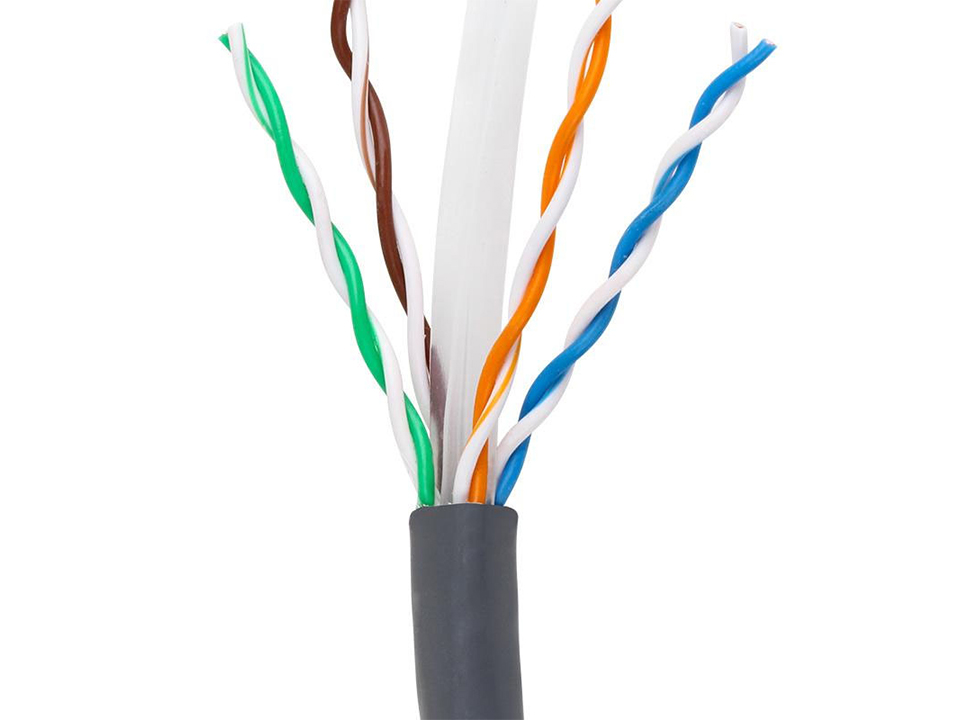
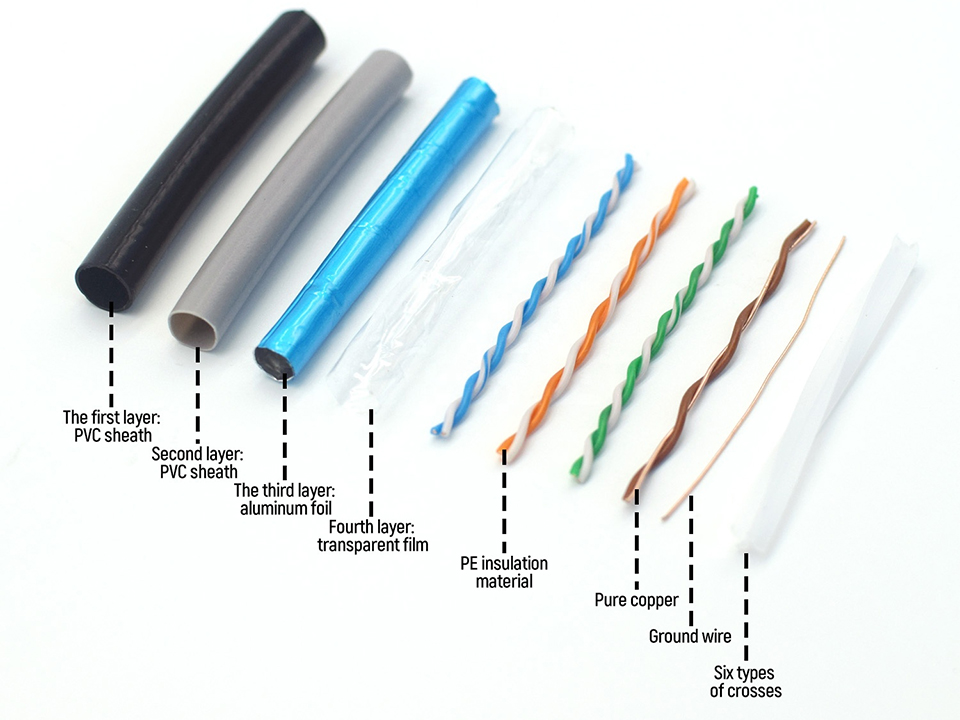
In plain English: S/FTP means each twisted pair is foil-shielded, and the cable also has an overall braided screen. That is why it shows up in control cabinets, SMT lines, semiconductor tools, inspection systems, barcode stations, machine vision networks, AOI/SPI equipment zones, and noisy factory links where cheap UTP becomes a maintenance tax.
But shielding is not magic.
If the shield termination is bad, if the drain wire is mishandled, if the connector is wrong, or if the grounding plan is sloppy, a premium CAT6A S/FTP cable can become a very expensive antenna. I do not care how glossy the supplier datasheet looks. I want the test file.
The Testing Checklist I Would Put Inside the RFQ
A serious CAT6A S/FTP cable testing checklist should not be a soft recommendation. It should be a contractual attachment.
Use this as buyer-side RFQ language:
Test Area
What to Request
Why It Matters
Buyer Acceptance Rule
Wire map
100% continuity, pair order, shield continuity
Finds miswire, split pair, open shield, short circuit
Pass only; no repair note accepted without disclosure
Length
Permanent link or channel length report
Stops suppliers from shipping over-length assemblies
Must match PO tolerance, usually ±3%
Insertion loss
CAT6A frequency sweep
Confirms usable signal margin
Must pass CAT6A limit across tested range
NEXT / PSNEXT
Near-end crosstalk and power-sum NEXT
Catches poor twisting, bad connector work, cheap plugs
Oil, abrasion, bend radius, drag-chain rating if applicable
Factory cable damage is not theoretical
Must match installation zone
The dirty little secret: many suppliers can provide a continuity test, but far fewer can provide a defensible CAT6A certification test with traceable test equipment, calibration date, and exported result files.
Ask for the PDF. Ask for the raw file. Ask for the tester serial number.
Fluke Test Reports: Useful, But Not Sacred
A Fluke CAT6A cable test is useful because it gives buyers a common language: wire map, insertion loss, NEXT, return loss, propagation delay, delay skew, and pass/fail status against a defined limit.
But I have a strong opinion here: a pass report without context is not enough.
Was it tested as a channel or permanent link? Was the adapter correct? Was the cable coiled during testing? Was the patch cord test limit used incorrectly? Was the shield path actually verified? Was the report for the same batch shipped to you, or just a sample the supplier keeps on the shelf for nervous customers?
These are not academic questions. They are the difference between a cable that passes on a bench and a cable that survives beside motion control wiring, servo power, and switching power supplies.
That is why I would cross-check network cable RFQs with adjacent automation wiring categories. If the same project includes motor wiring, ask whether the vendor also understands shielded servo cable for semiconductor and SMT automation, because the grounding and EMI discipline overlaps more than procurement teams admit.
The RFQ Clauses Suppliers Hate
Good. Include them anyway.
Here is the buyer-side wording I would use:
“Supplier shall provide batch-specific CAT6A cable testing records for all shipped cable assemblies, including wire map, length, insertion loss, NEXT, PSNEXT, return loss, ACR-F, PSACR-F, propagation delay, delay skew, and shield continuity. Reports must identify tester model, calibration date, test limit, cable ID, batch number, and operator name.”
Too much?
Not if the cable supports an inspection cell, wafer handling tool, SMT production line, industrial PC cluster, or any process where a one-hour stoppage costs more than the cable order.
Add this too:
“Substitution of jacket material, shielding structure, conductor type, plug type, connector shell, or test standard is not permitted without written approval.”
That sentence saves money. It blocks silent substitutions, which are common when copper prices move, suppliers change factories, or a distributor fills an urgent order from a secondary source.
CAT6A S/FTP Cable Testing vs Ordinary Continuity Testing
Continuity testing only proves the cable is connected. CAT6A cable testing proves whether the cable can perform at the required electrical level under a defined category limit.
That distinction sounds small until the network starts dropping packets.
Buyer Question
Continuity Test
CAT6A Certification Test
Are the pins connected?
Yes
Yes
Is the pair order correct?
Usually
Yes
Is the cable electrically suitable for CAT6A?
No
Yes
Does it check high-frequency performance?
No
Yes
Does it expose return loss problems?
No
Yes
Does it confirm crosstalk margin?
No
Yes
Does it support serious RFQ acceptance?
Weakly
Strongly
Should it be enough for industrial networks?
No
Yes
Continuity testers belong in tool bags. Certification testers belong in procurement evidence files.
The Industrial Network Failure Pattern Nobody Puts in the Brochure
The failure pattern is ugly and familiar.
A new machine is installed. Everything works during FAT. Then the cable is routed differently during site installation. It shares a tray with servo wiring. The cabinet ground is not exactly as drawn. A shielded plug is replaced with an unshielded one because “it fits.” The link works at first. Then, under load, during certain motor cycles, random communication errors appear.
People argue.
The PLC vendor blames the network. The network contractor blames the machine builder. The machine builder blames the customer’s installation. The buyer asks for replacement cable after the warranty clock has already started.
This is why the RFQ must define both cable construction and test acceptance before the PO.
If your production cell also depends on electronics assemblies or replacement control modules, align the cable RFQ with sourcing for custom PCB control board supply for SMT automation. The same buyer discipline applies: batch identity, revision control, test records, and no silent substitution.
Backup Supplier Planning Is Not Optional
Here is the hard truth: backup supplier planning for industrial Ethernet cable should happen before the first order, not after the first shortage.
For critical industrial equipment, I want two approved sources and one emergency source. Not three random vendors. Approved sources. That means each supplier has already passed document review, sample testing, connector compatibility checks, packaging review, and response-time stress testing.
I use a simple qualification ladder:
Supplier Tier
Role
Minimum Evidence Required
When to Use
Primary
Normal production orders
Full CAT6A test reports, stable lead time, approved samples
Standard replenishment
Backup A
Risk-balanced secondary source
Same construction, same connector, same certification test scope
When primary lead time slips
Backup B
Emergency source
Pre-tested samples, approved substitution rules
Line-down or repair event
Disqualified
Price-only vendor
No batch test data, vague construction, no calibration proof
Never for critical networks
The backup supplier should not merely quote the same words. They must prove the same performance.
And yes, I would pay more for that.
What to Inspect When the Cable Arrives
Incoming inspection is where lazy RFQs get punished.
Open the carton. Check the labels. Match cable IDs to test reports. Confirm connector shell type. Confirm shielded RJ45 or M12 X-coded construction if specified. Check jacket printing. Check length. Check bend damage. Pull a sample for verification testing if the batch is high-risk.
Do not let warehouse receiving treat industrial network cable like office consumables.
For SMT and semiconductor production zones, I would also check how the cable interacts with nearby ESD-controlled work areas. A network cable may not be an ESD product, but poor routing through benches, test stations, and repair areas can create mechanical abuse and grounding confusion. This is where a modular ESD workbench for SMT and semiconductor assembly becomes relevant to the installation plan, not just the workstation plan.
Red Flags in Supplier Quotations
Some quotes smell wrong immediately.
“CAT6A compatible.” “Equivalent to S/FTP.” “Tested before shipment.” “Industrial quality.” “Fluke pass available upon request.” “Same function, different brand.”
These phrases are not automatic disqualifiers, but they are invitations to ask harder questions. “Compatible” can mean not certified. “Equivalent” can mean construction changed. “Tested” can mean continuity only. “Upon request” can mean they do not test every batch.
My least favorite supplier answer is: “No customer has complained.”
That is not quality control. That is a complaint-based detection system with a purchase order attached.
Best CAT6A Cable for Industrial Networks: My Buyer Criteria
The best CAT6A cable for industrial networks is not the thickest cable, the most expensive cable, or the one with the prettiest datasheet. It is the cable whose construction, connector system, test evidence, and supplier controls fit the actual installation.
For fixed cabinet wiring, I care about shielding, bend radius, flame rating, connector quality, and certification data.
For moving machinery, I care about flex life, jacket material, drag-chain suitability, torsion behavior, and strain relief.
For semiconductor and SMT automation, I care about electromagnetic noise, maintenance repeatability, contamination concerns, and whether the supplier understands factory downtime economics. If the same plant is also sourcing equipment such as a desktop PCB conformal coating machine for SMT automation, cable quality should be handled with the same process discipline as machine procurement.
RFQ Data Pack: What I Would Demand Before Approval
Do not approve a CAT6A S/FTP cable supplier until you have this pack:
RFQ Document
Required?
Buyer Comment
Cable datasheet
Yes
Must state conductor, shielding, jacket, impedance, rating
Connector datasheet
Yes
Shielded shell and industrial connector details matter
The best RFQ is boring. It leaves almost no room for interpretation.
Procurement Mistake: Buying Cable Without System Context
A cable RFQ should not sit alone.
It should mention the machine type, installation zone, expected link speed, connector type, cabinet routing, motion exposure, ambient temperature, oil exposure, cable tray density, and whether the cable shares space with servo, pneumatic, inspection, or power equipment.
If pneumatic motion hardware such as an SMC CDG1BN100-300Z pneumatic cylinder for SMT automation is part of the same cell, cable routing must account for vibration, mechanical movement, clamp points, and maintenance access. Cabling is physical infrastructure. Treat it that way.
My Short RFQ Template for Buyers
Use this wording and tighten it for your plant:
“Buyer requests quotation for CAT6A S/FTP industrial Ethernet cable assemblies for factory automation use. Supplier must quote cable construction, conductor material, AWG, shielding structure, jacket material, connector type, rated temperature, minimum bend radius, applicable test standard, and batch-specific CAT6A cable testing documentation. Quote must include lead time, MOQ, sample availability, backup production capacity, warranty terms, and written confirmation that no material or connector substitution will occur without buyer approval.”
That paragraph does more work than most three-page RFQs.
FAQs
What is CAT6A cable testing?
CAT6A cable testing is the formal verification process used to confirm that a CAT6A copper Ethernet cable meets required electrical performance limits, including wire map, insertion loss, crosstalk, return loss, length, propagation delay, delay skew, and shielding continuity where shielded cable is specified.
For industrial networks, I would not accept continuity testing as a substitute. A real CAT6A certification test should identify the test standard, instrument model, calibration date, operator, and cable ID. Without that, the supplier is asking you to trust a claim instead of checking a result.
How do you test CAT6A S/FTP cable?
Testing CAT6A S/FTP cable requires both category performance verification and shield integrity checks, normally using a certified field tester such as a Fluke DSX-series unit or equivalent, with the correct adapters, selected CAT6A test limit, and documented pass/fail report for each cable assembly.
The extra S/FTP issue is shielding. I want proof that the foil pairs, braided screen, shielded connector body, and drain path are handled correctly. A cable can pass basic continuity and still be wrong for an electrically noisy industrial cabinet.
What should be included in a CAT6A cable RFQ guide?
A CAT6A cable RFQ guide should include construction requirements, connector type, jacket material, installation environment, required test standard, batch-specific certification reports, tester calibration proof, packaging expectations, substitution controls, warranty terms, and backup supplier requirements for critical industrial equipment.
Do not let the RFQ say only “CAT6A S/FTP cable.” That is not enough. Define the acceptance evidence. Define whether the cable is for fixed cabinet wiring, field connection, drag-chain movement, or high-density cable trays. The supplier’s quotation should answer those points before price is discussed.
Is shielded Ethernet cable testing different from unshielded cable testing?
Shielded Ethernet cable testing is different because the buyer must verify both normal CAT6A transmission performance and the continuity, termination quality, and mechanical integrity of the shielding system, especially where S/FTP cable is used near motors, drives, power supplies, or automation equipment.
The main trap is assuming shielded automatically means safer. It does not. Bad shield termination can create noise problems that look random, expensive, and hard to reproduce. That is why shield continuity belongs in the checklist, not in a side note.
What is the best CAT6A cable for industrial networks?
The best CAT6A cable for industrial networks is the cable that matches the installation environment, passes documented CAT6A certification testing, uses the correct shielded connector system, survives mechanical and chemical exposure, and comes from a supplier that can provide repeatable batch evidence and backup sourcing support.
I would rather buy from a slightly more expensive supplier with test discipline than a cheap supplier with beautiful photos and weak paperwork. In factories, the cheapest cable often becomes expensive after the first unexplained network fault.
Why does backup supplier planning matter for industrial Ethernet cable?
Backup supplier planning matters because critical industrial equipment depends on repeatable parts availability, and a cable shortage, silent substitution, or unqualified emergency purchase can stop production just as effectively as a failed PLC, servo drive, inspection camera, or control board.
A backup supplier must be qualified before the emergency. Samples should be tested. Reports should be reviewed. Connector compatibility should be confirmed. Otherwise, the “backup” is only a name in a purchasing spreadsheet.
CTA
Before you approve a CAT6A S/FTP cable RFQ, demand the test report, the construction details, the substitution policy, and the backup supplier plan. If a supplier cannot explain CAT6A cable testing in the same language your maintenance and controls engineers use, do not let them hide behind the word “industrial.”